

How To Draw A Crumbling Building
This tutorial will teach you how to draw a basic fantasy medieval castle. I will be focusing on the two about obvious defensive elements of the castle; walls and towers. Past learning to draw walls and towers, you volition be able to combine these two basic structures into many unlike castle, keep and stronghold designs.
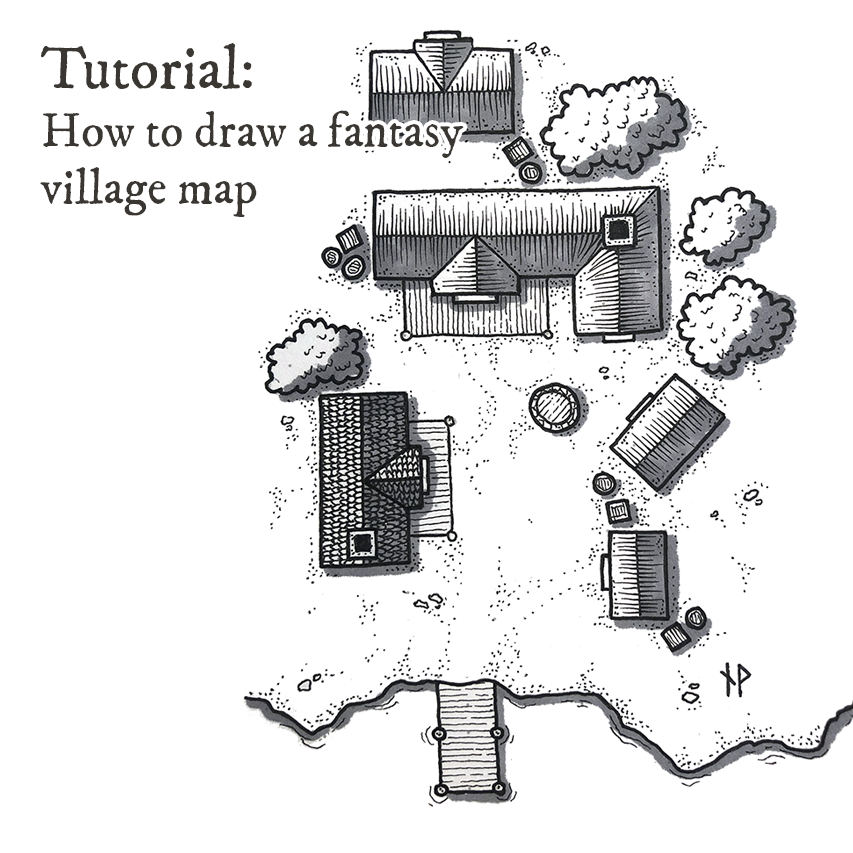
The walls and towers you are about to learn to describe works very well with the buildings in my fantasy village map tutorial.
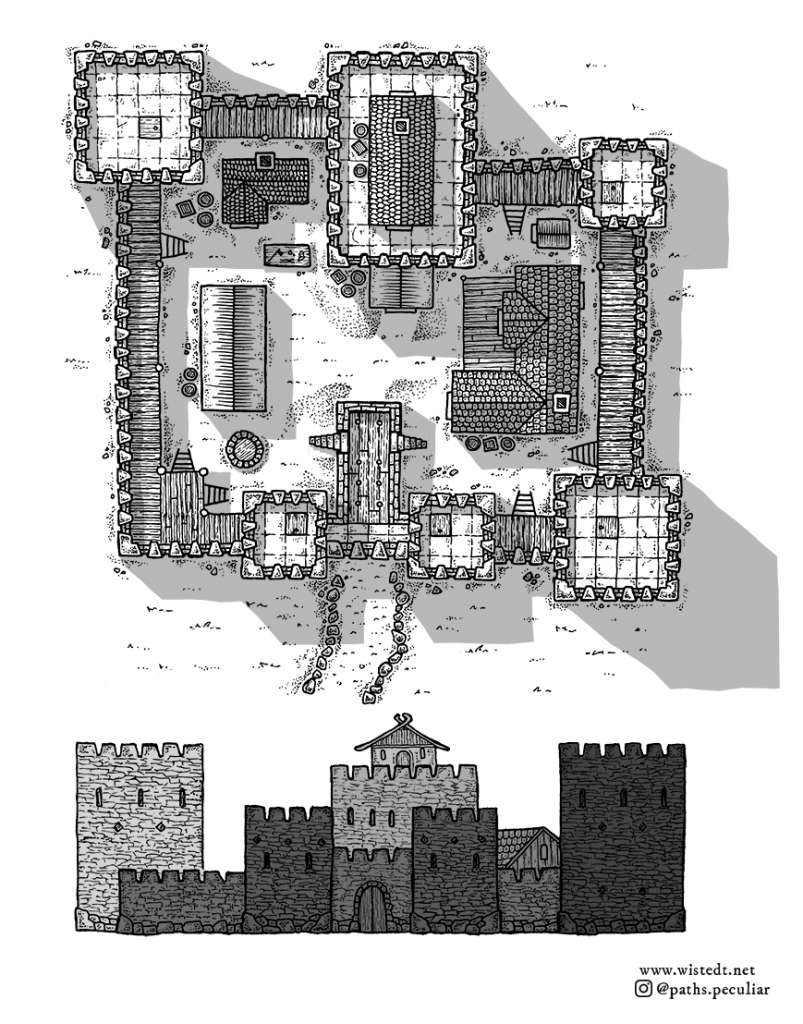
Only let'southward start with the basics, shall we?
Tools for map making
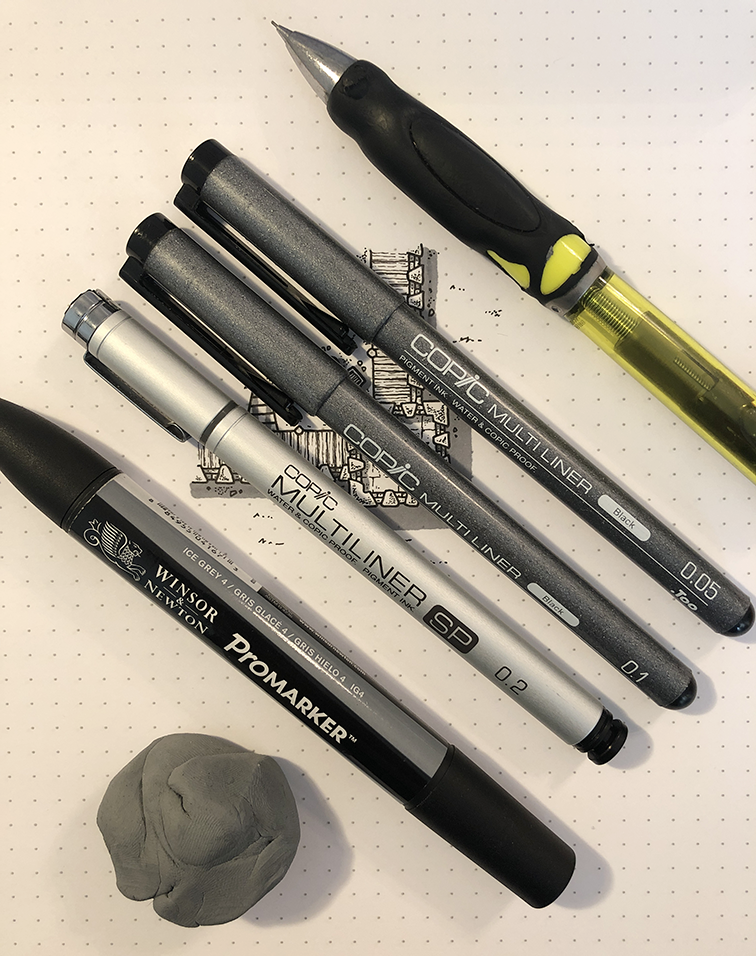
For this tutorial, I'1000 working with the post-obit tools:
- Rhodia DotPad
- Copic Multiliner (virtually brands of fineliners such every bit Pigma Micron or Staedtler will practice simply as well) of sizes 0.2, 0.1 and 0.05
- Winsor & Newton Promarker
- Kneaded eraser (whatsoever eraser volition practice)
- Pencil
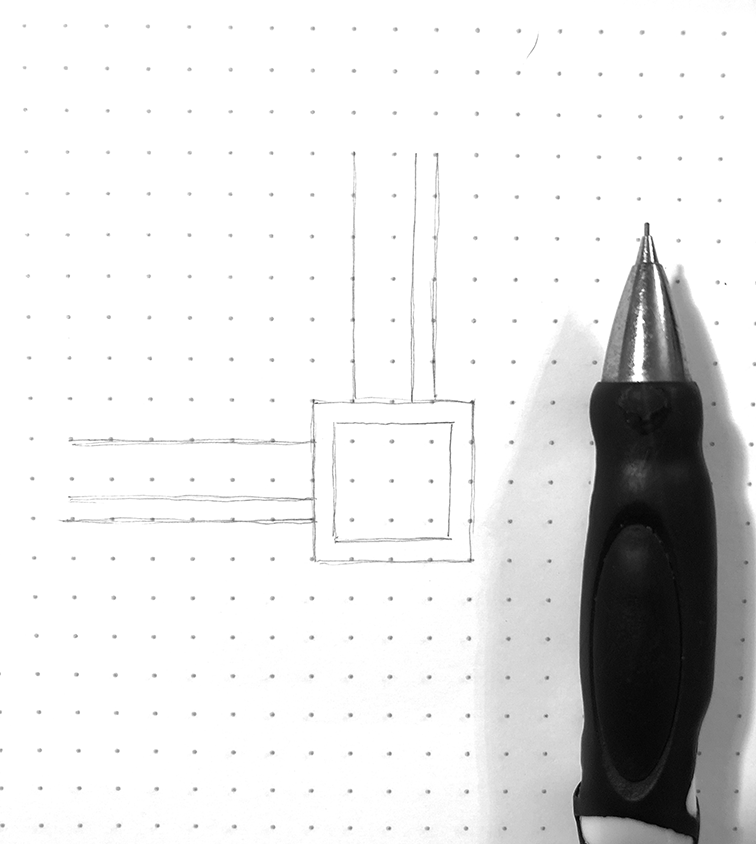
Step 1 – draw the bones castle layout
Draw you lot bones castle layout with a pencil. Don't push button too hard, yous will need to erase some of these lines subsequently on. Combine walls and towers to create the design yous want. Make sure you lot exit enough room within the walls should y'all want to add together structures there, like houses or a fortified tower.
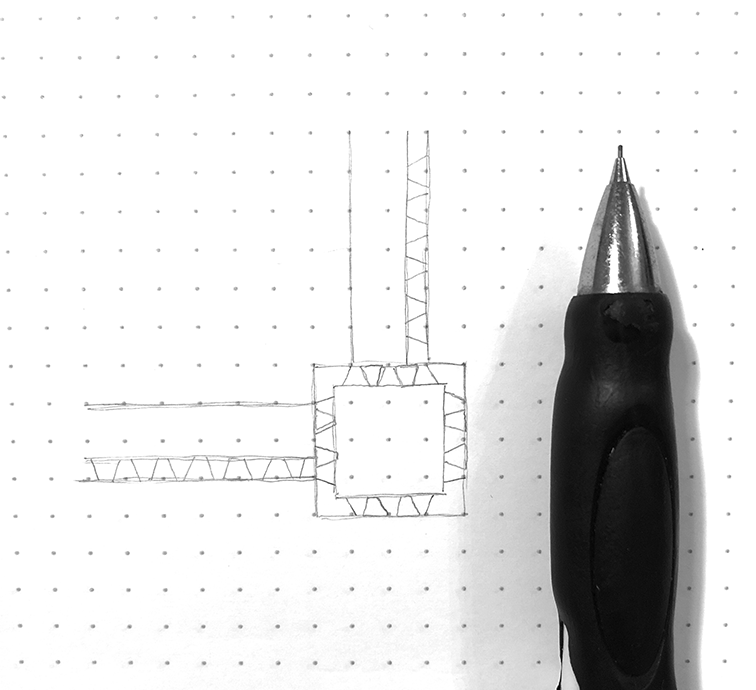
Pace 2 – add crenellation to the battlements
Still pencil. Describe the type of crenellation yous want for the wall and towers. I've decided to get with triangular shaped "merlons" to give defending archers an reward (more room to aim, while harder for attackers to hit the gap from the outside). There'southward room for creativity here, so feel free to play around with different designs!
Step 3 – ink outline of merlons
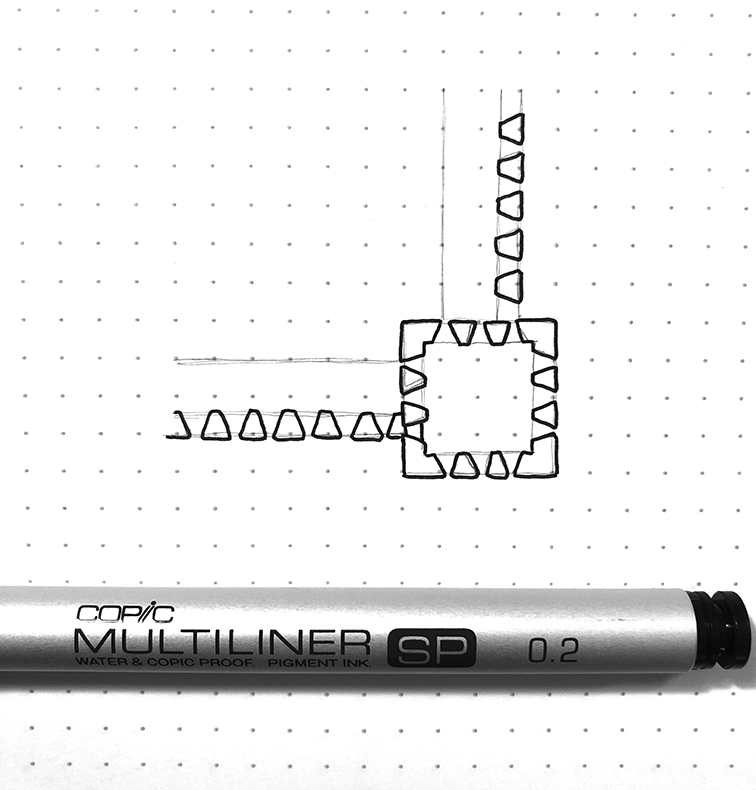
Use a 0.2 pen to draw the ink outlines, outset with the merlons to avoid any mistakes. This is a quite straightforward step, but it requires some concentration. Don't use a ruler – some imperfection makes information technology expect more than organic.
Step four – residuum of outlines
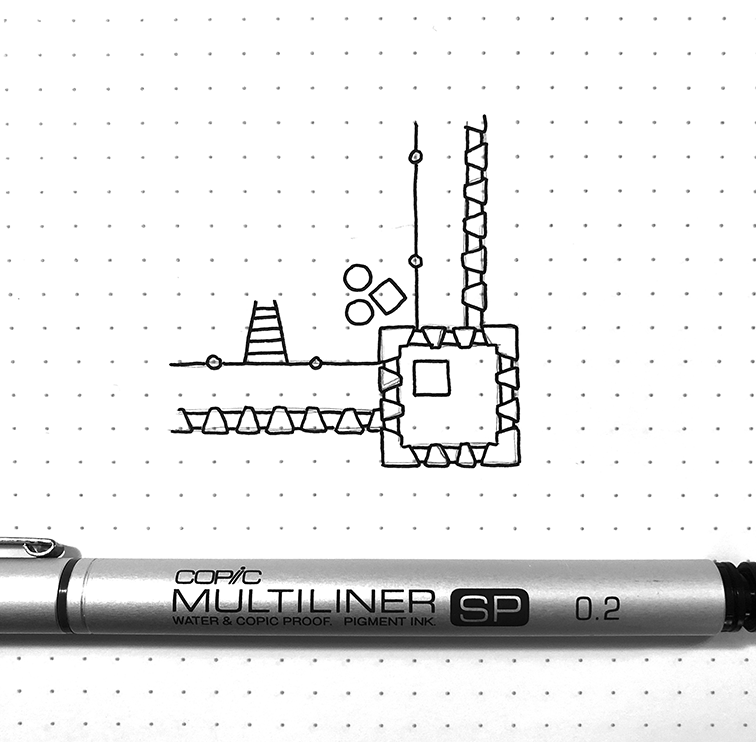
Draw the rest of the outlines with a 0.two pen. Again, quite straightforward. I added some supporting poles for the wooden walkway, as well every bit a ladder and a few barrels and crates for flavor. I besides outlined a hatch in the belfry floor.
At the end of this pace, wait for the ink to dry (give it a couple of minutes) and and then carefully erase any visible guides you drew with pencil. If you impairment the ink outline, just fix information technology with a smaller pen – no biggie.
Step 5 – draw bricks and flagstones
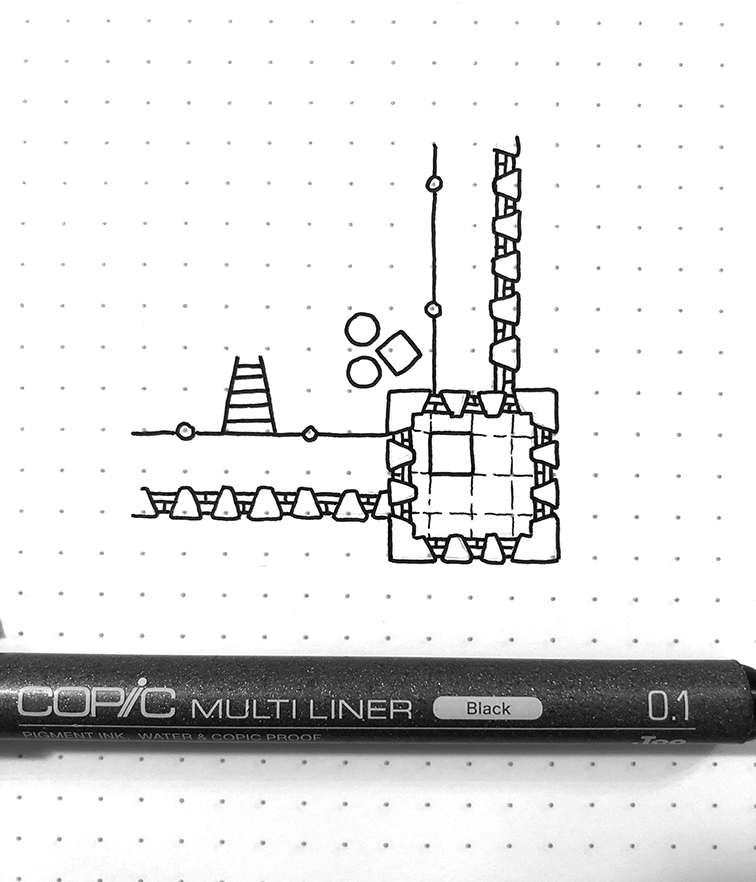
Utilize a 0.ane pen to draw bricks in the wall visible in the crenels (the surface area betwixt the merlons). Apply the aforementioned pen – simply less pressure – to describe flagstones in the tower flooring (unless y'all prefer a wooden floor, that is).
Stride six – stone texture
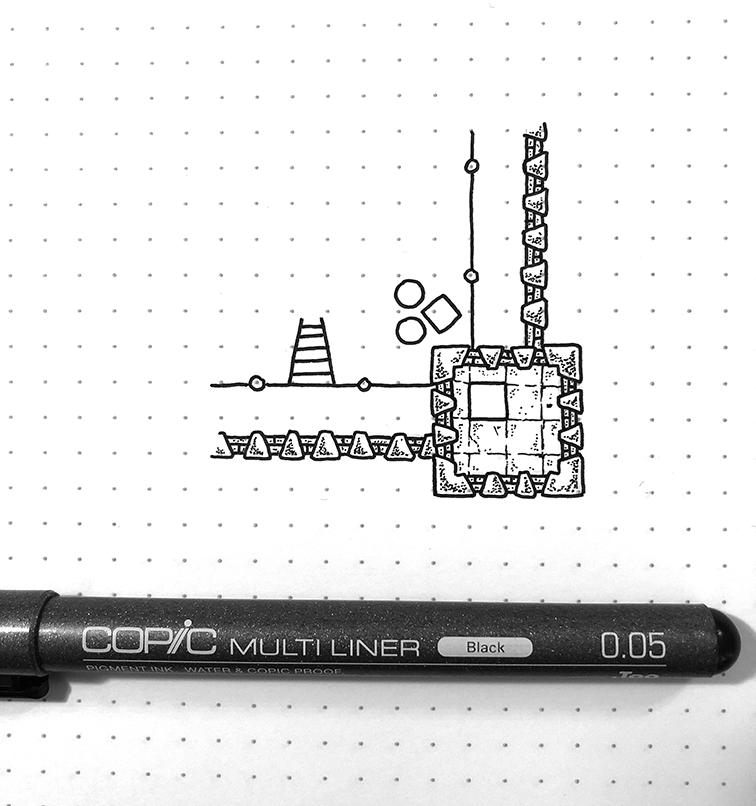
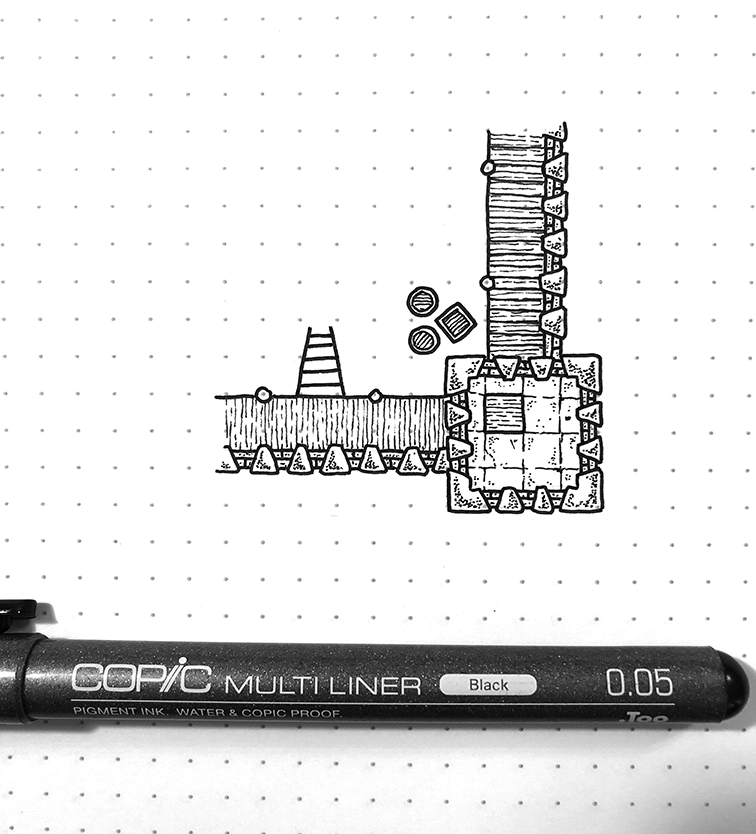
With a 0.05 pen, add dots and scratches to the rock parts of the map: crenels, merlons and flagstones.
Step 7 – woods texture
Depict forest grain on the walkway and tower hatch with your 0.05 pen. It's basically simply parallel, slightly shaky, lines fatigued with very little pressure level practical. It'south not difficult, just yous might want to do this a little fleck on a divide paper before doing it on your map.
To create the look of planks (shown on the right walkway) simply draw a few lines applying slightly more pressure than when you drew the grains.
Add some grain to the barrels and crates likewise.
Step viii – ground clutter and texture
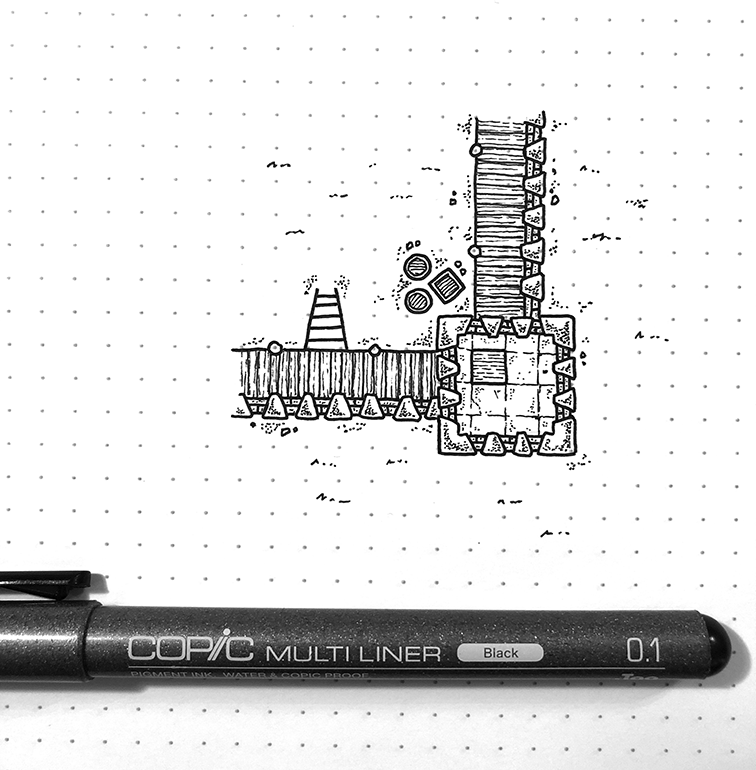
Only add some dust and scratches, small patches of grass, gravel and stones to the basis to give it a trivial bit of organic feel. You don't need to overdo this, only take your fourth dimension. Maps defective this kind of "clutter" oftentimes feels a bit unfinished.
Step 9 – shadows
Use a gray marker to add shadows to the map. Decide where your lite source is, and then draw shadows on the opposing sides of elevated objects. In this case, I decided the light source was in the upper left corner, so shadows were added to the right, and below, the walls and battlements.
Taller objects has longer shadows – compare the wall shadow to the tower shadow, for example.
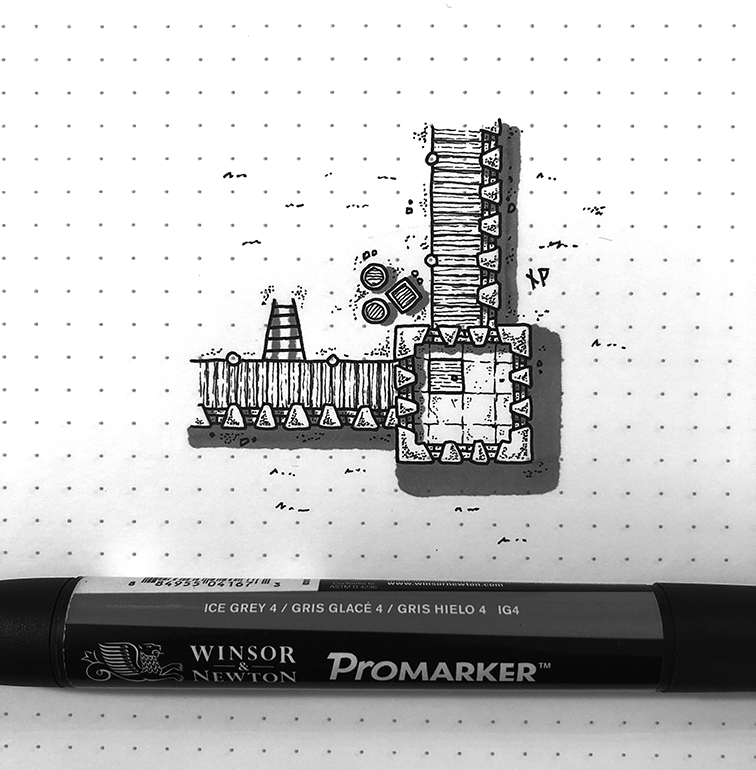
And that'south bascially information technology! That'due south how yous describe walls and towers. This is the basic technique I use, and I employ combinations of these walls and towers to create larger castles.
Actually promise you enjoyed this tutorial!
Alternative way of calculation shadows – using Photoshop (or similar software)
For many of my maps, I choose to add together the shadows in Photoshop after the drawing is completed. While not as fun as cartoon them by hand, it helps not to have any gray parts on the drawing when you scan/photograph it. I create the (flat grey) shadows in a separate layer, and then alter the layer fashion to "multiply". I so suit the opacity of the layer to get the right intensity of the shadows.
Back up my piece of work – buy me a beer (if you desire)
If you like my stuff and desire to give me a tip to cheer me on, please click the button beneath.
Please note that tipping is of course appreciated but non in whatsoever way expected!
More tutorials:

Source: https://www.wistedt.net/tutorials/tutorial-how-to-draw-a-fantasy-castle-map/
Posted by: woodsreaccurtut.blogspot.com
0 Response to "How To Draw A Crumbling Building"
Post a Comment